
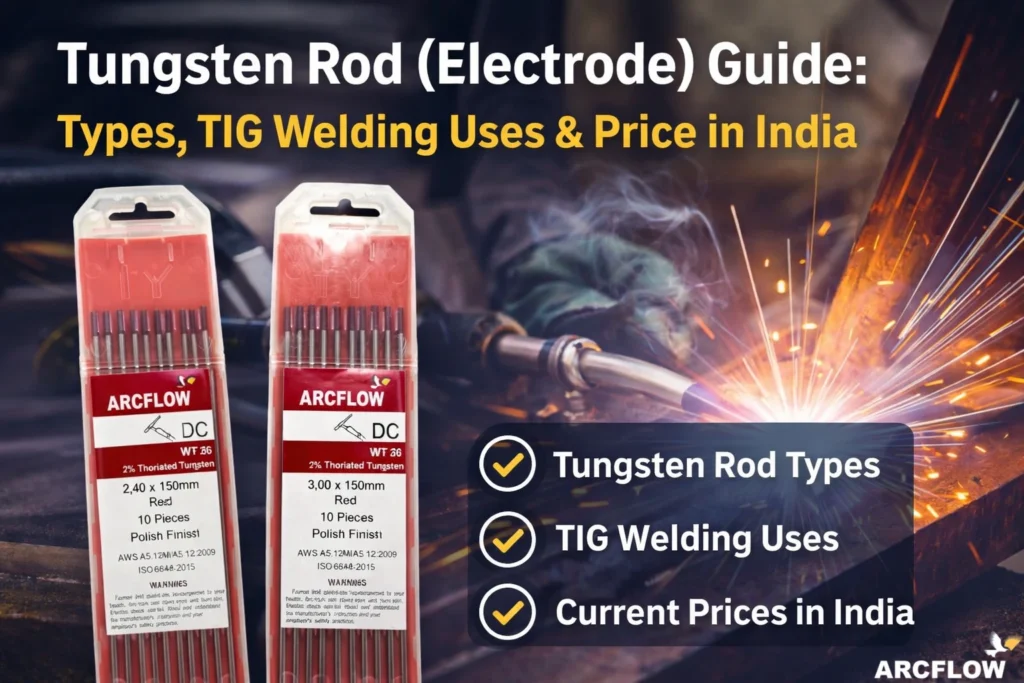
Achieving a precise weld requires holding steady, staying sharp, and working step by step. A solid tungsten rod (electrode) makes the difference when building tight, smooth joints that last. Stainless steel, aluminium, and tricky blends – each one relies on the correct rod choice. Arc behaviour shifts noticeably based on which tungsten fits your torch. Weld looks matter just as much as strength, both shaped heavily by this small part. Performance rises quietly when materials match the method without forcing it.
Here’s a look at various kinds of tungsten rods. Different jobs need different rods, so matching type to the task matters. Price shifts based on material mix, thickness, and where it is bought across India. Some picks work better for high heat, others last longer under steady use. Choosing right means checking what the weld demands first. One size never fits all when sparks start flying.
What is a Tungsten Rod in Welding?
A tungsten rod for TIG welding is a non-consumable electrode used in TIG (argon) welding processes. It carries the welding current and creates the arc while maintaining its shape due to tungsten’s high melting point.
It is widely used in:
- Fabrication industries
- Stainless steel welding
- Aluminium welding
- Heavy industrial applications
Tungsten Rod Types
Understanding different tungsten rod types helps you select the right electrode for your material.
1️⃣ Pure Tungsten (Green)
- Ideal for aluminium
- Best for AC welding
- Commonly used as a tungsten rod for argon welding
2️⃣ Thoriated Tungsten (Red)
- Suitable for DC welding
- Excellent for stainless steel
- Provides stable arc and long life
3️⃣ Ceriated Tungsten (Grey)
- Good for low amperage welding
- Works well for thin sheet metals
4️⃣ Lanthanated Tungsten (Blue/Gold)
- Versatile for both AC and DC
- Suitable for stainless steel and aluminium
Tungsten Electrode for Stainless Steel
For stainless steel welding, thoriated or lanthanated electrodes are preferred. A high-quality tungsten electrode for stainless steel ensures:
- Stable arc
- Deep penetration
- Minimal contamination
- Smooth finish
This makes it ideal for fabrication, railing work, tanks, and industrial pipelines.
Tungsten Electrode for Aluminium
Aluminium requires AC welding, so pure tungsten or lanthanated electrodes are recommended. A reliable tungsten electrode for aluminium provides:
- Smooth arc start
- Controlled heat input
- Clean weld appearance
Tungsten Rod for TIG Welding in India
The demand for tungsten rod for TIG welding in India is increasing due to growth in fabrication, construction, and automotive industries. When choosing suppliers, consider:
✔ Consistent diameter accuracy
✔ High purity tungsten
✔ Long electrode life
✔ Trusted tungsten rod manufacturers & suppliers
Quality matters because low-grade tungsten rods may cause arc instability and faster wear.
TIG Welding Tungsten Rod Price in India
The TIG welding tungsten rod price depends on:
- Diameter (1.6mm, 2.4mm, 3.2mm, etc.)
- Type (Pure, Thoriated, Lanthanated)
- Brand quality
- Quantity purchased
Generally, tungsten rod welding products are priced higher than regular electrodes due to premium raw materials and durability. However, investing in quality electrodes reduces replacement cost and improves weld performance.
For bulk orders, prices are more competitive when purchased directly from reliable tungsten rod manufacturers & suppliers.
How to Choose the Right Tungsten Rod
Here’s a quick selection guide:
Material | Recommended Tungsten Rod | Welding Type |
Stainless Steel | Thoriated / Lanthanated | DC |
Aluminium | Pure / Lanthanated | AC |
Thin Sheet | Ceriated | DC Low Amp |
Heavy Fabrication | Lanthanated | AC/DC |
Why Quality Tungsten Rod Matters
Using a premium tungsten rod for TIG welding ensures:
✔ Longer electrode life
✔ Better arc stability
✔ Reduced weld defects
✔ Higher productivity
✔ Cleaner weld finish
Poor quality rods may crack, contaminate the weld pool, or reduce arc efficiency.
Conclusion
Picking the correct tungsten rod(electrode) matters if clean TIG welds are what you want. Not every job uses the same setup – argon setups differ from those handling stainless steel. Aluminium work brings its own demands too. Knowing which type of electrode fits your task clears up confusion before it starts. Price tags shift depending on composition, so comparing them makes sense only after function matches. Start by looking at how well a tungsten rod holds up under stress, not just the price tag. A steady supply matters more than flashy promises. What counts is whether each batch feels identical to the last. Skip those cutting corners just to save money. Solid work shows in every detail, especially when things heat up. Trust what performs, not what sounds good on paper.